Environment, Energy and Climate

rb_website_environment.jpg

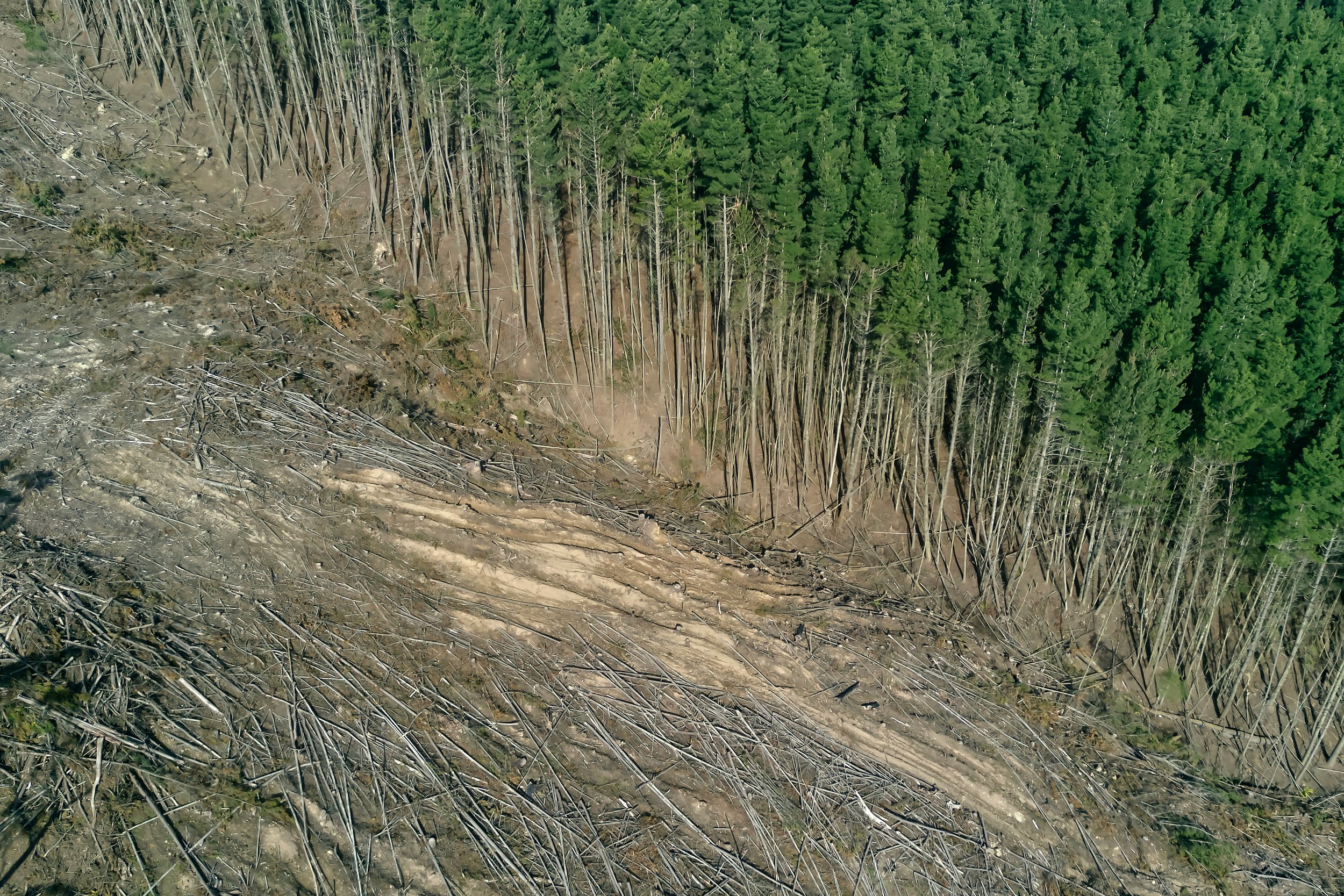
How do economic and political incentives affect how humans interact with our natural environment? How can the global electrification be reconciled with climate change goals? And how can some of the most severe damages to our environment - pollution, climate change, and deforestation - be prevented?

Robin Burgess' work attempts to address these questions using novel sources of data, such as remote sensing data, and innovative methods like randomized controlled trias (RCTs). It often centers on the tension between economic growth and the externalities created by human activity.

Recently, Robin Burgess has founded the Economics of Environment and Energy Research Programme at the LSE, serving as a platform to connect young and established researchers in environmental economics and to mainstream issues of environment, energy, and climate within economics and economic policy.


Listen to Robin Burgess discussing his recent research (with Michael Greenstone, Nicholas Ryan, and Anant Sudarshan) in a VoxDev talk with Tim Phillips. The topic of the talk is how treating electricity as a right deteriorates the quality of electricity supply in developing countries.

Should electricity be a right? Evidence from India
VoxDev Talk with Robin Burgess

Ray of Hope? China and the Rise of Solar Energy

With Ignacio Banares-Sanchez, David Laszlo, Pol Simpson, John Van Reenen and Yifan Wang

Revise and Resubmit, The Quarterly Journal of Economics, 2026

Draft

Press Coverage: VoxDev, VoxEU, VoxChina

Abstract
Do industrial policies that promote clean energy offer a "ray of hope", increasing a country's growth and welfare, whilst simultaneously reducing carbon emissions? We study the impact of Chinese solar subsidies whose implementation by city-regions went alongside massive expansion of the sector and a dramatic fall in global solar prices. We construct new city and firm panel data on solar policies, patenting and output. Using synthetic-difference-in-differences 2004-2020, we find production and innovation subsidies were more effective than demand-side (installation) subsidies in generating large and persistent increases in local innovation, net entry, production and exports. Demand policies did, however, reduce local pollution. To examine aggregate effects, we build and structurally estimate a quantitative spatial model with endogenous innovation and heterogeneous productivity across firms and cities, which accounts for business stealing and knowledge spillovers. Counterfactual analysis shows that: (i) local effects remain substantial at the macro level explaining 40%-50% of the aggregate changes in solar innovation, prices and revenues; (ii) social benefits to Chinese citizens exceed subsidy costs by 65% (and double this when environmental benefits are included); and (iii) although all subsidy types increase welfare, innovation subsidies are the most cost-effective. Read more...
 

The Economics of Tropical Deforestation

With Clare Balboni , Aaron Berman and Benjamin A. Olken

In: The Annual Review of Economics, 2023, 15, 723-754

Published Version

Online Appendix

Abstract
Two factors have elevated recent academic and policy interest in tropical deforestation: first, the realization that it is a major contributor to climate change; and second, a revolution in satellitebased measurement that has revealed that it is proceeding at a rapid rate. We begin by reviewing the methodological advances that have enabled measurement of forest loss at a fine spatial resolution across the globe. We then develop a simple benchmark model of deforestation based on classic models of natural resource extraction. Extending this approach to incorporate features that characterize deforestation in developing countries---pressure for land use change, significant local and global externalities, weak property rights, and political economy constraints---provides us with a framework for reviewing the fast-growing empirical literature on the economics of deforestation in the tropics. This combination of theory and empirics provides insights not only into the economic drivers and impacts of tropical deforestation but also into policies that may affect its progression. We conclude by identifying areas where more work is needed in this important body of research. Read more...
 

The Origins and Control of Forest Fires in the Tropics

With Clare Balboni and Ben Olken In: The Review of Economic Studies, 2025 Published Version Online Appendix

Press Coverage: VoxDev Talks Podcast, CEPR-VDEV Webinar

Abstract
Environmental externalities – uncompensated damages imposed on others – lie at the root of climate change, pollution, deforestation and biodiversity loss. Empirical evidence is limited, however, as to how externalities drive private decision making. We study one such behavior, illegal tropical forest fires, using 15 years of daily satellite data covering over 107,000 fires across Indonesia. Weather-induced variation in fire spread risk and variation in who owns surrounding land allow us to identify how far externalities influence the decision to use fire. Relative to when all spread risks are internalized, we find that firms overuse fire when surrounded by unleased government lands where property rights are weak. In contrast, and consistent with Coase, firms treat risks to nearby private concessions similarly to risks to their own land. Government sanctions, concentrated on fires spreading to populated areas, also deter fires, consistent with Pigouvian deterrence. Read more...
 

The Global Electrification Frontier and Climate Change

With Michael Greenstone, Nicholas Ryan and Anant Sudarshan

Submitted

Draft

Press Coverage: The Economist, IGC Blog, Forbes

Abstract
Off-grid solar promises a low-cost and carbon-free path to electrification. But do poor households want it? We run a multi-year pricing experiment in rural India to estimate demand over all electricity sources, including off-grid solar, diesel generators and the grid. We find that off-grid solar is an important stop-gap, but households value grid electrification 6.6 times more. The grid, however, barely increases global surplus, because grid marginal carbon damages nearly offset households’ gains. We apply our model to data from Africa and find a similarly strong preference for the grid among households there, underscoring the external validity of our results. Read more...
Short Video
Full Documentary
 

The Consequences of Treating Electricity as a Right

With Michael Greenstone, Nicholas Ryan and Anant Sudarshan

In: Journal of Economic Perspectives, 2020, 34(1): 145-169.

Published Version

Press Coverage: IGC Blog

Abstract
This paper seeks to explain why billions of people in developing countries either have no access to electricity or lack a reliable supply. We present evidence that these shortfalls are a consequence of electricity being treated as a right and that this sets off a vicious four-step circle. In step 1, because a social norm has developed that all deserve power independent of payment, subsidies, theft, and nonpayment are widely tolerated. In step 2, electricity distribution companies lose money with each unit of electricity sold and in total lose large sums of money. In step 3, government-owned distribution companies ration supply to limit losses by restricting access and hours of supply. In step 4, power supply is no longer governed by market forces and the link between payment and supply is severed, thus reducing customers' incentives to pay. The equilibrium outcome is uneven and sporadic access that undermines growth. Read more...
Short Video
Full Documentary
 

The Political Economy of Deforestation in the Tropics

With Matthew Hansen, Ben Olken, Peter Potapov and Stefanie Sieber

In: The Quarterly Journal of Economics, 2012, 127(4): 1707-1754

Published Version Replication Data Online Appendix

Press Coverage: BOS Australia

Abstract
Tropical deforestation accounts for almost one-fifth of greenhouse gas emissions and threatens the world’s most diverse ecosystems. Much of this deforestation is driven by illegal logging. We use novel satellite data that tracks annual deforestation across eight years of Indonesian institutional change to examine how local officials’ incentives affect deforestation. Increases in the number of political jurisdictions lead to increased deforestation and lower timber prices, consistent with Cournot competition between jurisdictions. Illegal logging and local oil and gas rents are short-run substitutes, but this effect disappears over time with political turnover. The results illustrate how local officials’ incentives affect deforestation and show how standard economic theories can explain illegal behavior. Read more...

All Related publications

Working Papers

  1. Weathering Poverty
    Clare Balboni, Oriana Bandiera, Robin Burgess, Anton Heil, Clément Mazet-Sonilhac, Munshi Sulaiman, and Yifan Wang
    2026, Working Paper
    Link to working paper
  2. Ray of Hope, China and the Rise of Solar Energy
    Ignacio Banares-Sanchez, Robin Burgess, David Laszlo, Pol Simpson, John Van Reenen, and Yifan Wang
    2026, Revise and Resubmit, The Quarterly Journal of Economics
    Link to working paper
  3. The Global Electrification Frontier and Climate Change
    Robin Burgess, Michael Greenstone, Nicholas Ryan, and Anant Sudarshan
    2026, Resubmitted, Journal of Political Economy
    Link to working paper
  4. National Borders and the Conservation of Nature
    Robin Burgess, Francisco JM Costa, and Benjamin A. Olken
    2026, Revise and Resubmit, Journal of the European Economic Association
    Link to working paper
  5. Weather, Climate Change and Death in India
    Robin Burgess, Olivier Deschenes, Dave Donaldson, and Michael Greenstone
    2017, Working Paper
    Link to working paper

Published Papers

  1. The Origins and Control of Forest Fires in the Tropics
    Clare Balboni, Robin Burgess, and Benjamin A. Olken
    2025, In: The Review of Economic Studies
    Link to publication
  2. The Economics of Tropical Deforestation
    Clare Balboni, Aaron Berman, Robin Burgess, and Benjamin A. Olken
    2023, In: The Annual Review of Economics, 15, 723-754
    Link to publication
  3. Innovation, Growth, and the Environment
    Robin Burgess, Stefano Caria, Tim Dobermann, and Allegra Saggese
    2023, In: IGC White Paper on Sustainable Growth
    Link to publication
  4. Cycles of Fire? Politics and Forest Burning in Indonesia
    Clare Balboni, Robin Burgess, Anton Heil, Jonathan Old, and Benjamin A. Olken
    2021, In: American Economic Association: Papers and Proceedings, Vol. 111, 415–419.
    Link to publication
  5. The Consequences of Treating Electricity as a Right
    Robin Burgess, Michael Greenstone, Nicholas Ryan, and Anant Sudarshan
    2020, In: Journal of Economic Perspectives, 34 (1): 145–169.
    Link to publication
  6. War and Deforestation in Sierra Leone
    Robin Burgess, Edward Miguel, and Charlotte Stanton
    2015, In: Environmental Research Letters, 10 (9): 095014.
    Link to publication
  7. The Political Economy of Deforestation in the Tropics
    Robin Burgess, Matthew Hansen, Benjamin A. Olken, Peter Potapov, and Stefanie Sieber
    2012, In: The Quarterly Journal of Economics, 127 (4): 1707–1754.
    Link to publication
  8. Can Openness Mitigate the Effects of Weather Shocks? Evidence from India’s Famine Era
    Robin Burgess and Dave Donaldson
    2010, In: American Economic Review, 100 (2): 449–453.
    Link to publication